

MA-ID: 2844002018
Customer feedback Enumismatics Inc.

Hurtig levering fin mønt
die beste Verkäufer, super Verpakung, turbo Lieferung, immer wieder!!!!
die beste Verkäufer, super Verpakung, turbo Lieferung, immer wieder!!!!
die beste Verkäufer, super Verpakung, turbo Lieferung, immer wieder!!!!
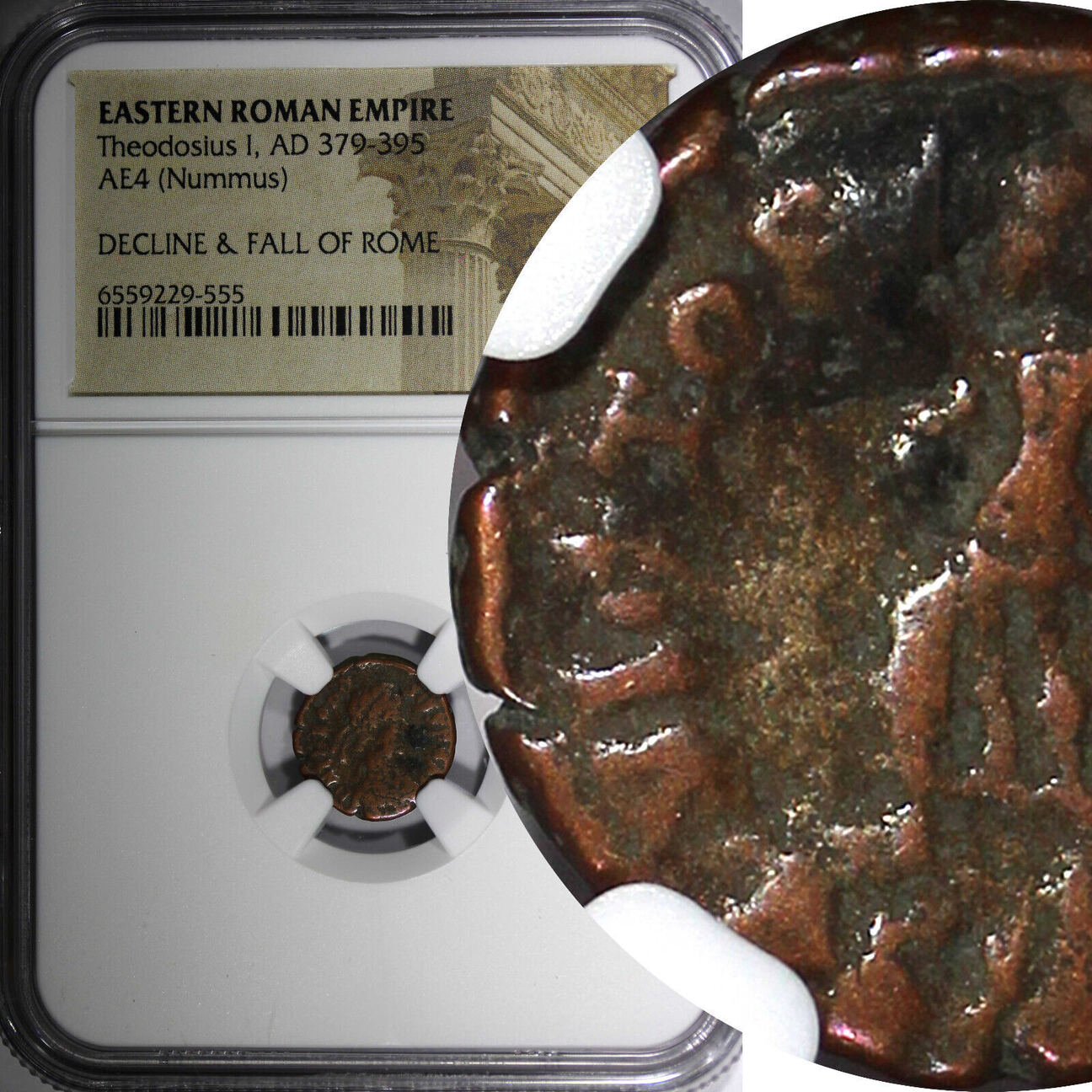
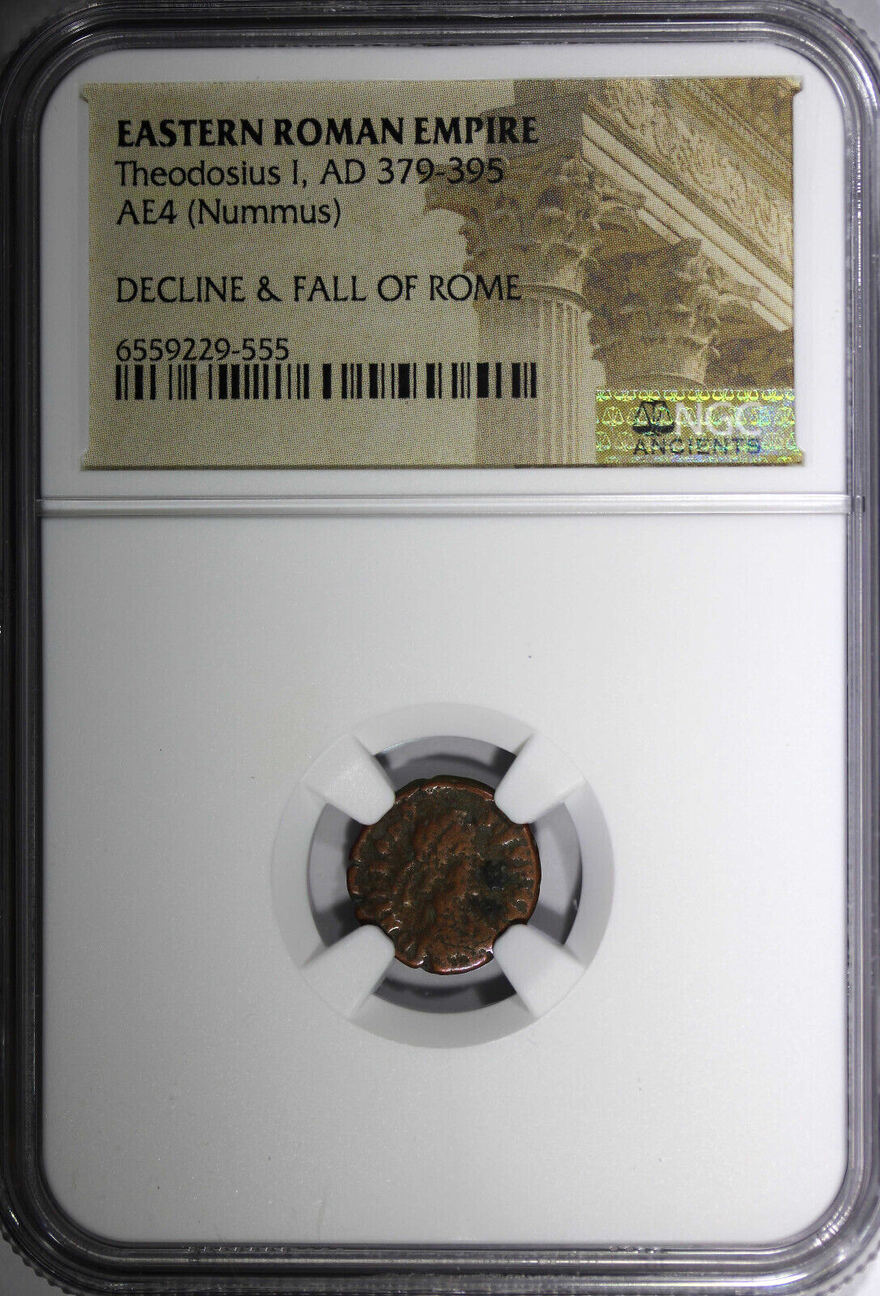
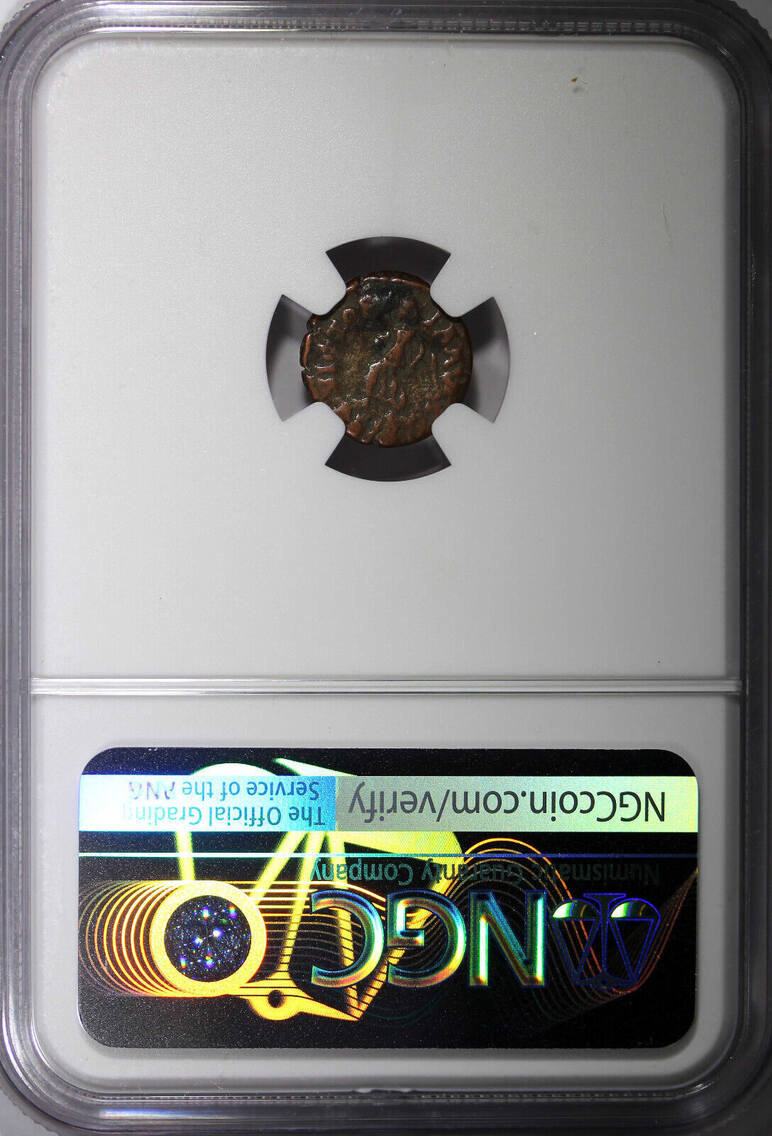
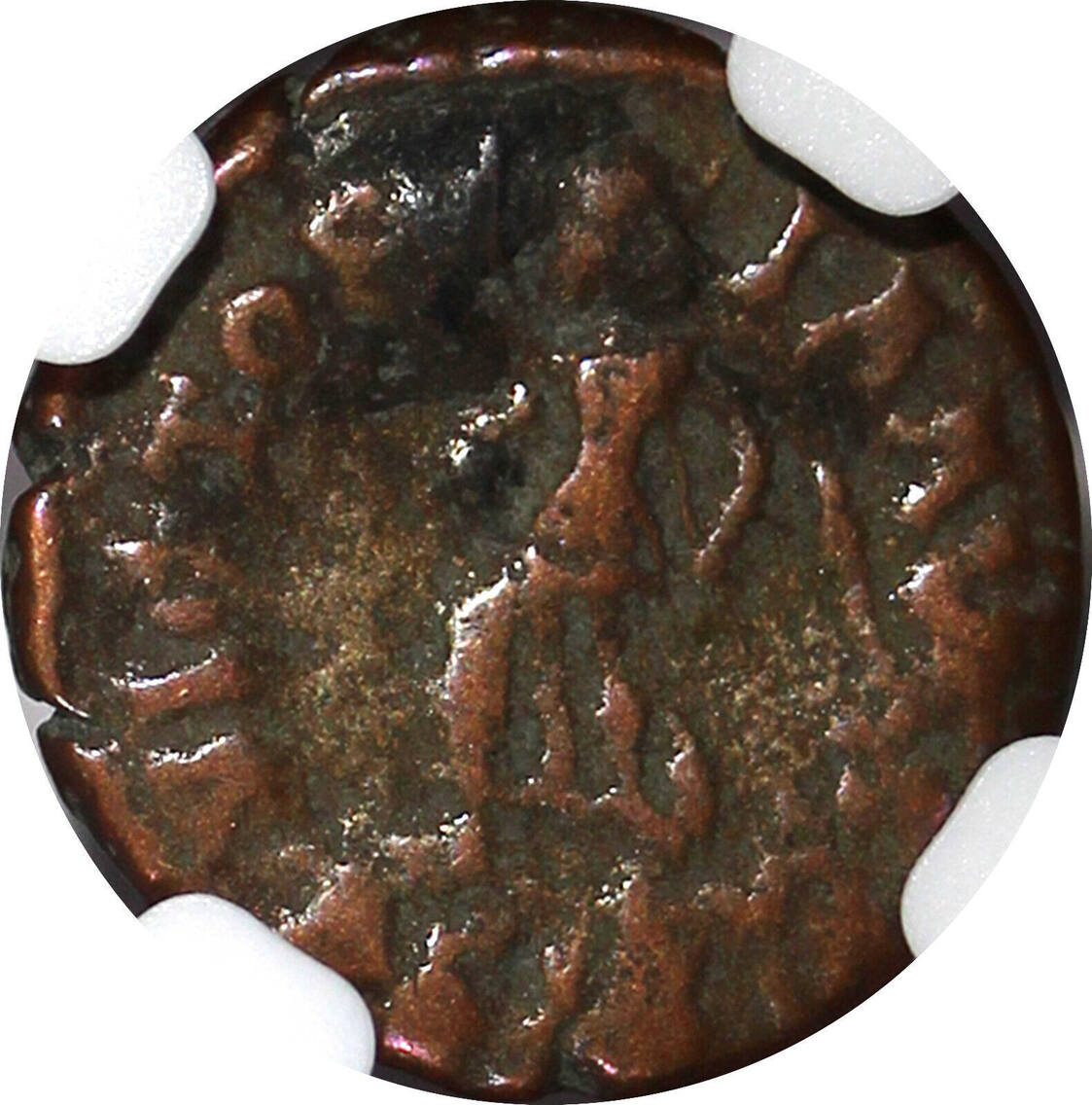
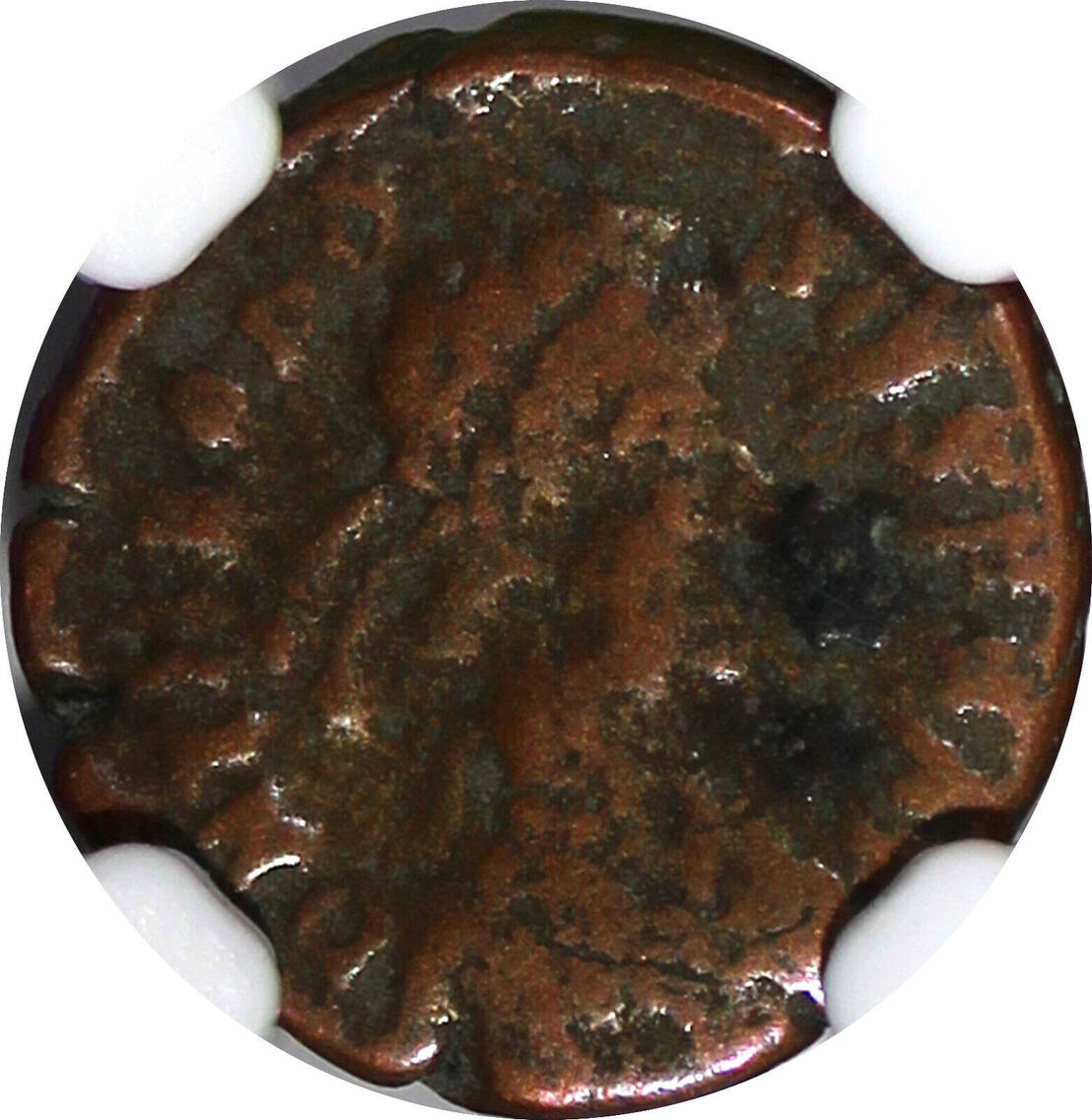
NUMMUS 395 AD EASTERN ROMAN Theodosius I,AD 379-395 AE4 /VICTORY ANGEL NGC (555)
Enumismatics Inc. 
11
On MA-Shops since 11 years
1279 ratings,
100 % Positive (last 24 months)
Worldwide shipping
40.00 US$
+ 6.00 US$ shipping ( to United States )
Delivery time: 2 - 3 days
| Customer Support 941.210.2677 |
| Payment methods |
| Wire Transfer |
| Check/Money Order |
EASTERN ROMAN EMPIRE
CERTIFIED BY NGC
Theodosius I , AD 379-395
Bronze AE4 Nummus
Obverse: Pearl diademed draped
cuirassed bust right
Reverse:
Victory advancing left, holding trophy and dragging captive.
Flavius Theodosius ( 11 January 347 – 17
January 395), also called Theodosius I and Theodosius the Great was Roman
Emperor from 379 to 395. Reuniting the eastern and western portions of the
empire, Theodosius was the last emperor of both the Eastern and Western Roman
Empire . After his death, the two parts split permanently. He is also known for
making Nicene Christianity the official state religion of the Roman Empire.
Staurogram
The Staurogram (meaning monogram of the cross, from the Greek σταυρός, i.e.
cross), or Monogrammatic Cross or Tau-Rho symbol, is composed by a tau (Τ)
superimposed on a rho (Ρ). The Staurogram was first used to abbreviate the Greek
word for cross in very early New Testament manuscripts such as P66, P45 and P75,
almost like a nomen sacrum, and may visually have represented Jesus on the
cross.
Ephrem the Syrian in the 4th-century explained these two united letters stating
that the tau refers to the cross, and the rho refers to the Greek word ''help''
which has the numerological value in Greek of 100 as the letter rho has. In such
a way the symbol expresses the idea that the Cross saves. The two letters tau
and rho can also be found separately as symbols on early Christian ossuaries.
The tau was considered a symbol of salvation due to the identification of the
tau with the sign which in Ezekiel 9:4 was marked on the forehead of the saved
ones, or due to the tau-shaped outstretched hands of Moses in Exodus 17:11. The
rho by itself can refer to Christ as Messiah because Abraham, taken as symbol of
the Messiah, generated Isaac according to a promise made by God when he was one
hundred years old, and 100 is the value of rho.:158
The Monogrammatic Cross was later seen also as a variation of the Chi Rho
symbol, and it spread over Western Europe in the 5th and 6th centuries.In
ancient Roman religion, Victoria or Victory was the personified goddess of
victory. She is the Roman equivalent of the Greek goddess Nike, and was
associated with Bellona. She was adapted from the Sabine agricultural goddess
Vacuna and had a temple on the Palatine Hill. The goddess Vica Pota was also
sometimes identified with Victoria.
Unlike the Greek Nike, the goddess Victoria (Latin for ''victory'') was a major
part of Roman society. Multiple temples were erected in her honor. When her
statue was removed in 382 CE by Emperor Gratianus there was much anger in Rome.
She was normally worshiped by triumphant generals returning from war.
Also unlike the Greek Nike, who was known for success in athletic games such as
chariot races, Victoria was a symbol of victory over death and determined who
would be successful during war.
Victoria appears widely on Roman coins, jewelry, architecture, and other arts.
She is often seen with or in a chariot, as in the late 18th-century sculpture
representing Victory in a quadriga on the Brandenburg Gate in Berlin, Germany;
''Il Vittoriano'' in Rome has two.
Flavius Theodosius ( 11 January 347 – 17)
January 395), also called Theodosius I and Theodosius the Great was Roman
Emperor from 379 to 395. Reuniting the eastern and western portions of the
empire, Theodosius was the last emperor of both the Eastern and Western Roman
Empire . After his death, the two parts split permanently. He is also known for
making Nicene Christianity the official state religion of the Roman Empire.
Please check out my other listings and we will be happy to combine in one package !
YOU WILL RECEIVED THE SAME COIN AS PICTURED.
CERTIFIED BY NGC
Theodosius I , AD 379-395
Bronze AE4 Nummus
Obverse: Pearl diademed draped
cuirassed bust right
Reverse:
Victory advancing left, holding trophy and dragging captive.
Flavius Theodosius ( 11 January 347 – 17
January 395), also called Theodosius I and Theodosius the Great was Roman
Emperor from 379 to 395. Reuniting the eastern and western portions of the
empire, Theodosius was the last emperor of both the Eastern and Western Roman
Empire . After his death, the two parts split permanently. He is also known for
making Nicene Christianity the official state religion of the Roman Empire.
Staurogram
The Staurogram (meaning monogram of the cross, from the Greek σταυρός, i.e.
cross), or Monogrammatic Cross or Tau-Rho symbol, is composed by a tau (Τ)
superimposed on a rho (Ρ). The Staurogram was first used to abbreviate the Greek
word for cross in very early New Testament manuscripts such as P66, P45 and P75,
almost like a nomen sacrum, and may visually have represented Jesus on the
cross.
Ephrem the Syrian in the 4th-century explained these two united letters stating
that the tau refers to the cross, and the rho refers to the Greek word ''help''
which has the numerological value in Greek of 100 as the letter rho has. In such
a way the symbol expresses the idea that the Cross saves. The two letters tau
and rho can also be found separately as symbols on early Christian ossuaries.
The tau was considered a symbol of salvation due to the identification of the
tau with the sign which in Ezekiel 9:4 was marked on the forehead of the saved
ones, or due to the tau-shaped outstretched hands of Moses in Exodus 17:11. The
rho by itself can refer to Christ as Messiah because Abraham, taken as symbol of
the Messiah, generated Isaac according to a promise made by God when he was one
hundred years old, and 100 is the value of rho.:158
The Monogrammatic Cross was later seen also as a variation of the Chi Rho
symbol, and it spread over Western Europe in the 5th and 6th centuries.In
ancient Roman religion, Victoria or Victory was the personified goddess of
victory. She is the Roman equivalent of the Greek goddess Nike, and was
associated with Bellona. She was adapted from the Sabine agricultural goddess
Vacuna and had a temple on the Palatine Hill. The goddess Vica Pota was also
sometimes identified with Victoria.
Unlike the Greek Nike, the goddess Victoria (Latin for ''victory'') was a major
part of Roman society. Multiple temples were erected in her honor. When her
statue was removed in 382 CE by Emperor Gratianus there was much anger in Rome.
She was normally worshiped by triumphant generals returning from war.
Also unlike the Greek Nike, who was known for success in athletic games such as
chariot races, Victoria was a symbol of victory over death and determined who
would be successful during war.
Victoria appears widely on Roman coins, jewelry, architecture, and other arts.
She is often seen with or in a chariot, as in the late 18th-century sculpture
representing Victory in a quadriga on the Brandenburg Gate in Berlin, Germany;
''Il Vittoriano'' in Rome has two.
Flavius Theodosius ( 11 January 347 – 17)
January 395), also called Theodosius I and Theodosius the Great was Roman
Emperor from 379 to 395. Reuniting the eastern and western portions of the
empire, Theodosius was the last emperor of both the Eastern and Western Roman
Empire . After his death, the two parts split permanently. He is also known for
making Nicene Christianity the official state religion of the Roman Empire.
Please check out my other listings and we will be happy to combine in one package !
YOU WILL RECEIVED THE SAME COIN AS PICTURED.
Info / FAQ


Information
Online orders are welcome as always and will be shipped directly.
|
Withdraw from contract here Seller Home | 0Shopping cart | Terms of sale | Contact | MA Terms of sale | Privacy policy | Warranty | MA-Shops New Items Copyright ® 2001-2026, MA-SHOPS Coins All Rights Reserved. Designated trademarks and brands are the property of their respective owners. |